

Did you know that humpback whales in Hawaii have some fascinating behaviors during their migration that tell us a lot about how they thrive in their environment?
Understanding how these magnificent creatures tackle the challenges of their long journey can give us valuable insights into their survival tactics.
By examining how they adapt to changing conditions and the conservation measures in place to safeguard their migration paths, we can truly appreciate the complexity of humpback whale migration in Hawaii.
Key Takeaways
When envisioning the humpback whale migration in Hawaii, imagine a graceful spectacle where nature and nurture seamlessly intertwine. Despite the looming specter of climate change threatening their journey, these magnificent creatures showcase incredible behavioral adaptations that display their resilience and flexibility. Conservation efforts are dedicated to preserving the continuity of this awe-inspiring migration, ensuring that the magnificence and wonder of humpback whales remain for generations to come.
Impact of Climate Change on Migration
Climate change is having a profound impact on the migration patterns of humpback whales in Hawaii. The warming of ocean temperatures, linked to climate change, is disrupting the availability of food sources that these whales rely on during their journey. This shift in temperatures is causing changes in the distribution of prey species, prompting humpback whales to alter their migration routes and timing. Consequently, there might be a mismatch between when the prey is most abundant and when the whales reach certain areas, affecting their feeding behaviors.
Additionally, climate change-induced alterations in ocean currents are also influencing the migratory paths of humpback whales. Changes in these currents can make travel more challenging for the whales, potentially leading to longer journeys or the need to navigate unfamiliar territories. Furthermore, the warming waters can result in shifts in the breeding and feeding grounds of humpback whales. These changes in habitat can significantly impact the overall migration patterns of humpback whales in Hawaii, as specific conditions are necessary for successful completion of their migration cycle. The increasing ocean acidification caused by climate change may further reduce the availability of prey for humpback whales during their migration.
Behavioral Adaptations During Migration
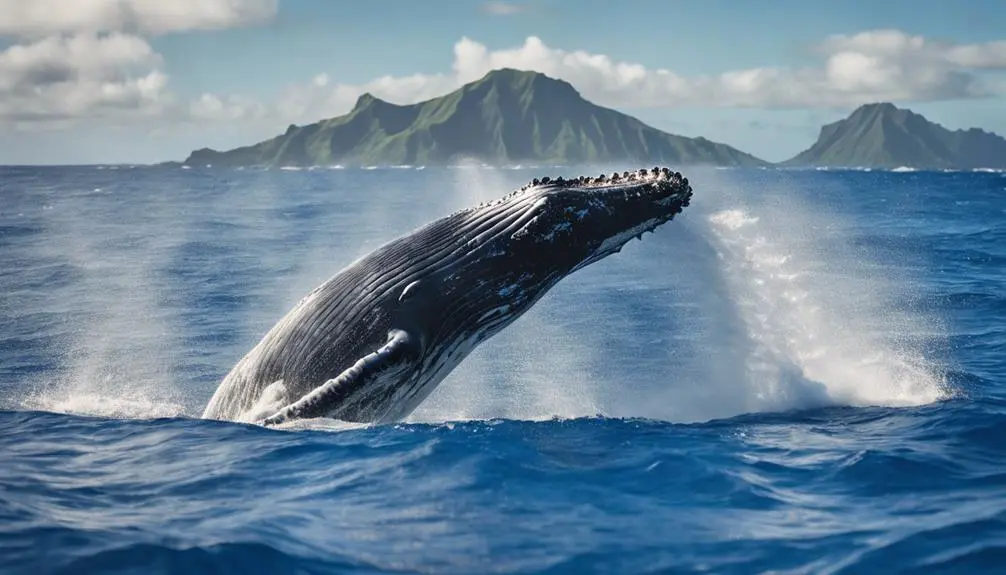
When humpback whales make their epic journey from Alaska to Hawaii, they shift their focus from feeding to traveling and reproduction. This change helps them conserve energy for the long trip and the important mating activities awaiting them in Hawaii's warm waters. Along the 3,000-mile migration route, these magnificent creatures display various adaptive behaviors that assist in their successful journey. Traveling at speeds of 3-7 miles per hour with few breaks, humpback whales demonstrate impressive endurance and efficiency in reaching their destination.
Communication plays a crucial role during migration, with humpback whales engaging in specific behaviors like breaching, tail slapping, and pectoral slapping. These actions serve multiple purposes such as social bonding, navigation, and potentially attracting mates. Male humpback whales also take on a protective role during migration, ensuring the safety of females and calves in their group.
Marine experts closely observe the whales' behaviors during migration, studying their reproductive activities, mating rituals, and even teaching behaviors. Through these observations, scientists gain valuable insights into the intricate social dynamics and communication patterns of humpback whales during this critical period.
Conservation Efforts for Migration
Migration of humpback whales is a remarkable journey that requires special conservation efforts to protect these majestic creatures. One significant initiative in this regard is the establishment of the Hawaiian Islands Humpback Whale National Marine Sanctuary back in 1992. This sanctuary serves as a safe haven under the shield of federal and state laws, ensuring the well-being of these endangered species during their migration.
Here are some key elements of the conservation efforts for humpback whales during their migration:
- Legal Protection: Humpback whales enjoy the status of endangered species, granting them legal protection through various federal and state laws. These laws ensure that conservation measures are in place to safeguard the whales during their migratory journey.
- Preservation of Vital Habitats: Specific areas like Maui County waters and the southwest region of Molokai are identified as crucial gathering spots for humpback whales during migration. Conservation efforts are tailored to these regions to provide a secure environment for the whales.
- Government Support: Congressional actions have been instrumental in passing laws and regulations to safeguard humpback whales and their habitats during migration. Governmental interventions are vital for enforcing conservation measures effectively.
- Adapting to Population Changes: As humpback whale populations grow, it becomes necessary to adjust conservation efforts to accommodate their spread to other Hawaiian islands. Continuous monitoring and adaptive conservation strategies are key to ensuring the ongoing protection of humpback whales during their migratory routes.
Frequently Asked Questions
What Is an Interesting Fact About Humpback Whale Migration?
One fascinating aspect of humpback whale migration is how these incredible creatures navigate vast distances with astonishing precision.

By relying on a mix of celestial cues, Earth's magnetic field, and recognizable landmarks, humpback whales showcase their remarkable adaptability and intelligence.
Each year, they embark on an awe-inspiring journey from Alaska to Hawaii and back, demonstrating a unique navigation system that highlights their mastery of the oceans.
What Is the Best Month to See Whales in Hawaii?
If you're planning a trip to Hawaii and want to catch a glimpse of majestic humpback whales, you're in luck! The best time to see these incredible creatures is from January to March. This is when they migrate from Alaska to Hawaii, with February standing out as the peak month for whale sightings.
During these months, you have the highest chances of witnessing fascinating whale behaviors, whether you opt for a whale watching tour or decide to observe them from the shoreline.
Don't miss this amazing opportunity to connect with nature and witness the beauty of these magnificent animals up close.
Why Do Humpback Whales Migrate to Hawaii?
Humpback whales make their way to Hawaii for some very specific reasons. The warm and welcoming waters of Hawaii create the perfect setting for humpbacks to mate, give birth, and care for their calves.
With a pregnancy lasting around 11 to 12 months, these gentle giants conceive and deliver their calves in these tropical waters. Hawaii acts as a vital sanctuary where the young calves can learn crucial survival skills before embarking on their journey back to Alaska.
This migration cycle plays a pivotal role in supporting the whales' reproductive and nurturing requirements.
What Does the Humpback Whale Symbolize in Hawaii?
In Hawaii, the humpback whale holds a special significance beyond being a magnificent creature. It represents peace, strength, and harmony, deeply rooted in Hawaiian culture.
Seen as a guardian of the ocean, this majestic mammal is revered as a sacred and spiritual being, believed to bring blessings and good fortune to those who cross paths with it.
Its elegance, beauty, and connection to nature make it a revered and symbolic figure in Hawaiian traditions.
Conclusion
When you think about the humpback whale migration in Hawaii, picture it as a graceful dance blending nature and nurture.

The looming threat of climate change casts a shadow over their journey, yet their remarkable behavioral adaptations reveal the resilience and flexibility of these majestic creatures.
Through dedicated conservation initiatives, we aim to safeguard the continuity of this breathtaking migration, ensuring that the beauty and marvel of humpback whales endure for future generations to cherish.
